

Sometimes our research makes waves around the world! A paper that one of our students recently published details the impacts that her PhD research has had on a biocontrol program in the United States.
An established biocontrol program that had been successfully controlling invasive Melaleuca trees in Florida came up against a roadblock recently. A parasitoid wasp not native to the area had appeared and was attacking the insects that are used in the biocontrol efforts.
How biocontrol programs work
Biocontrol programs involve using the natural enemies of a target species to limit it’s spread, reproduction, or attempt to remove it from an environment entirely.
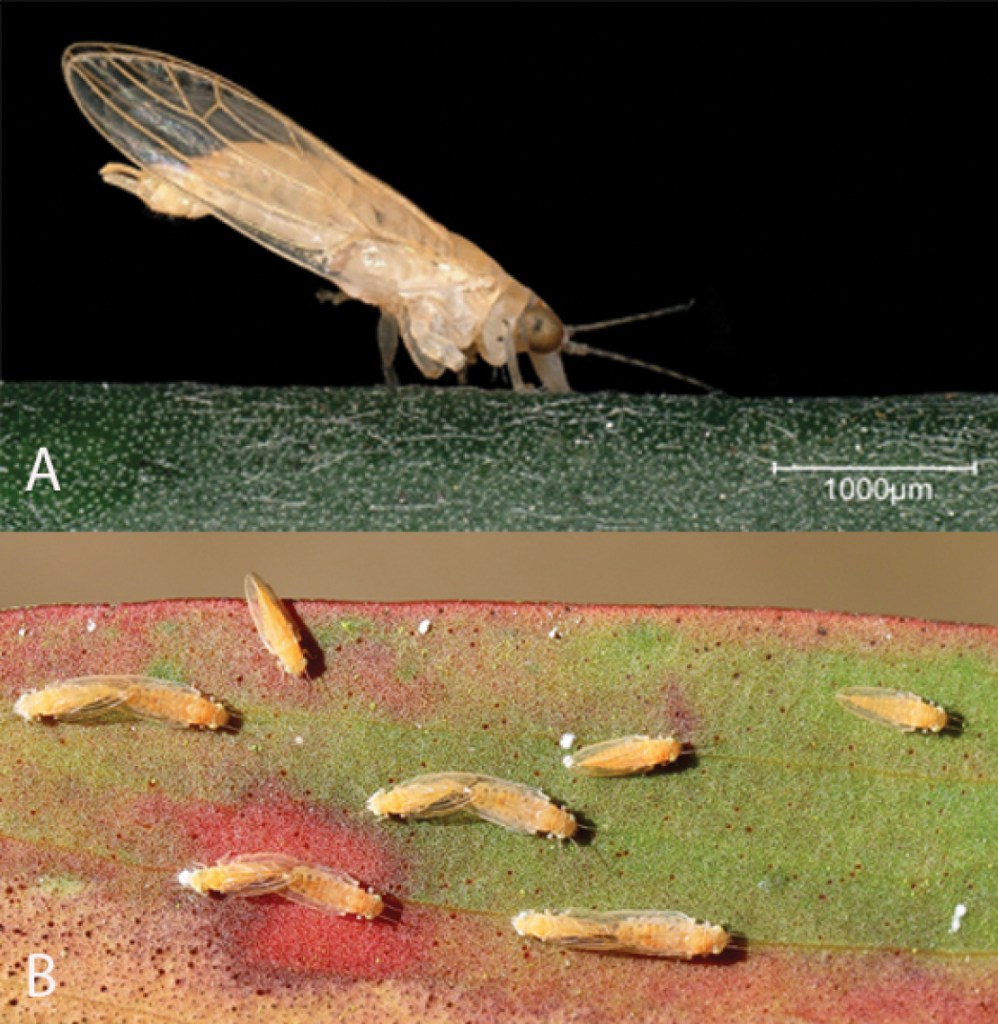
This program used psyllids (small plant feeding insects) to control the spread of the trees. Originally released in 2002, the psyllid (along with a beetle species also being used as a biocontrol agent), had led to gains being made in attempts to control the Melaleuca trees.
Unknown wasp discovered
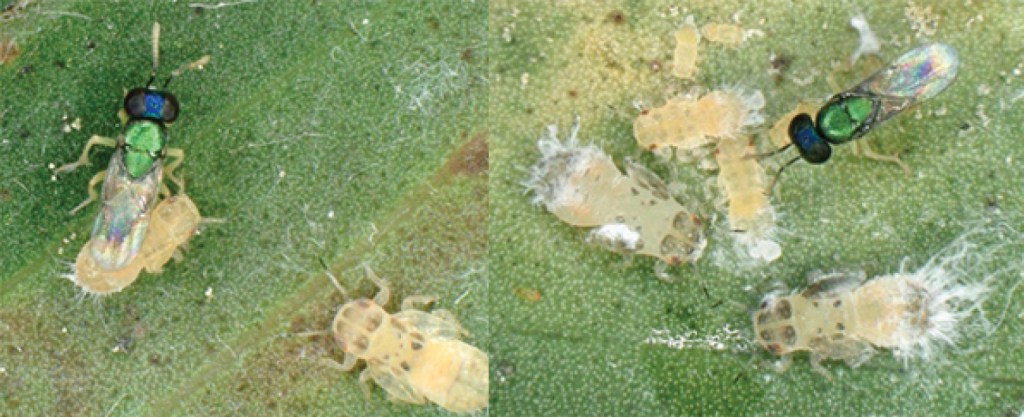
In 2020, an unidentified species of the Psyllaephagus wasp was found. First discovered in the backyard belonging to one of the paper’s authors, further exploration around Florida led to more specimens being found.
It was then determined that this wasp was causing the biocontrol efforts to be less effective, as the wasp was a natural enemy and ‘parasitoid’ of the psyllids used to control Melaleuca trees.
It was suspected that this wasp had made a long journey: all the way from Brisbane, Australia!
Science collaboration provides answers
To work out what had happened, and what could be done, a collaborative project was developed, involving researchers in both the US and Australia. The first step resulted in researchers in Brisbane going on the hunt for this wasp – and they found it!
Now that material had been found on either side of the Pacific, it was important to determine whether or not they were the same species.
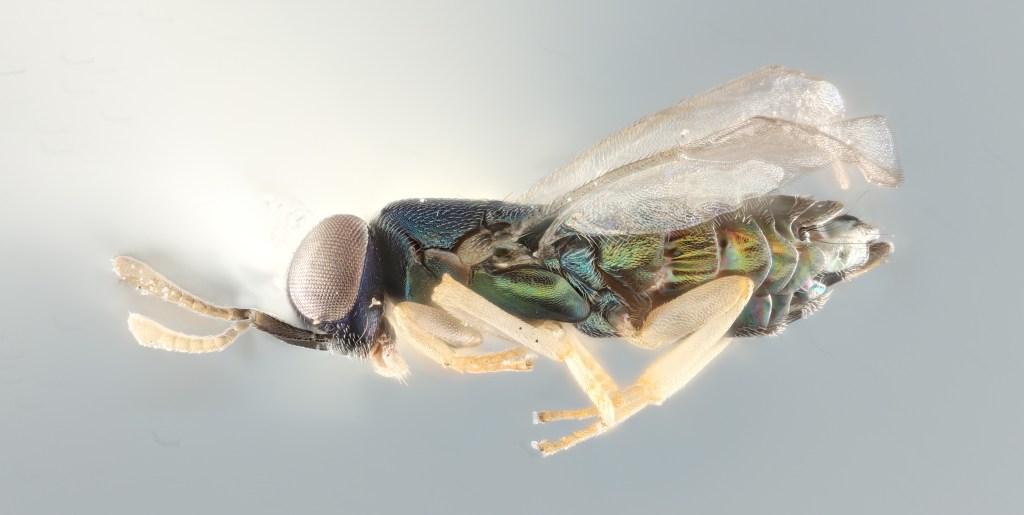
ISB lab member (and lead author) Alana McClelland examined and confirmed that the specimens from Florida, and the specimens from Brisbane were the same species. What’s more, she realised that at the time of collecting, this species was undiscovered and undescribed!
So to help with future biocontrol efforts, and with efforts to describe the entirety of Australia’s biodiversity, Alana described this new species. This involved sequencing its DNA and exploring it’s morphology: its physical traits, to determine what makes it different to other closely related species.
Finally, a name needed to be chosen. Because this species had wandered all the way from Australia to North America before it was described, it was decided that the term ‘migrator’ would be used, so the wasp was named ‘Psyllaephagus migrator‘.
You can read all about it in the open access article HERE.

 Invertebrate Systematics and Biodiversity Lab
Leave a comment