
Managing the green bridges in and around canola fields pre-season helps reduce the risk of early season pest and disease outbreaks.
Pests don’t take a break between seasons—so why should we?🌱
Unwanted weeds and leftover crops form green bridges which can help pests survive the off-season and hit your crops early. Green bridge management tips:
✔ Control weeds 4+ weeks before sowing
✔ Use pest-unfriendly cover crops
✔ Rotate crops to break pest cycles
✔ Destroy volunteer plants before planting
Smart management = fewer pests, stronger crops. 🌾
#PestManagement #GreenBridge #CropProtection #BioloicalControlAgents #Precious_wasps
But wait, green bridges can also harbour a range of beneficial insects, including ladybird beetles, hoverflies and parasitoid wasps that build up on pest populations. Identify plants that encourage the survival of beneficials and consider reducing herbicide application on green bridges to support beneficial insects’ populations and naturally control pests in crops.
What is an Aphid parasitoid?
Aphid parasitoid wasps are small (up to 4mm long) natural enemies that deposit an egg within an aphid. As the parasitoid larva develops it consumes the aphid from within. When the larva matures, it spins a cocoon while the aphid dies, the aphid body changes into a swollen tan or golden husk known as a ‘mummy’. This husk protects the parasitoid larva during development. When a winged adult parasitoid is ready to emerge, it will cut a hole in the husk and exit the mummy. This development process can take up to 15 days depending on temperature and the parasitoid species.
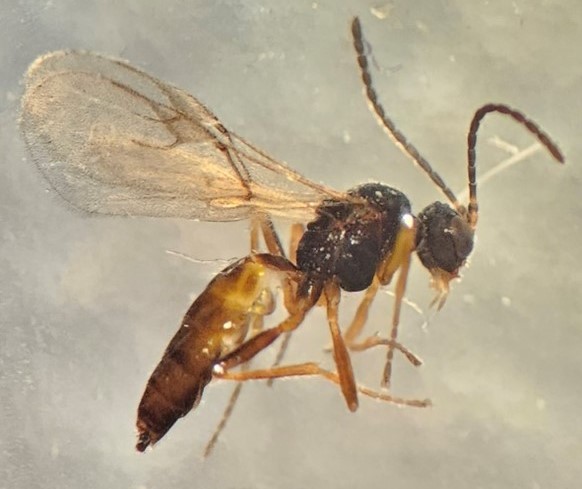
Whilst we know that aphids can survive on various plants including weeds, in the absence of crops; little is known about the survival of parasitoid wasps over summer. Through the University of Adelaide, my project aims to get an insight into the survival strategy of the aphid parasitoids.
Since the beginning of this year, I have set up surveillance units of suction traps, yellow sticky traps and yellow pan traps in four canola paddocks scattered between the north (Turretfield and Pinery) and south (Bowhill and Keith) in some canola growing regions of South Australia. With the active participation of our local growers, the traps are changed regularly, brought back to the Waite campus laboratory and screened for aphids and parasitoids presence.
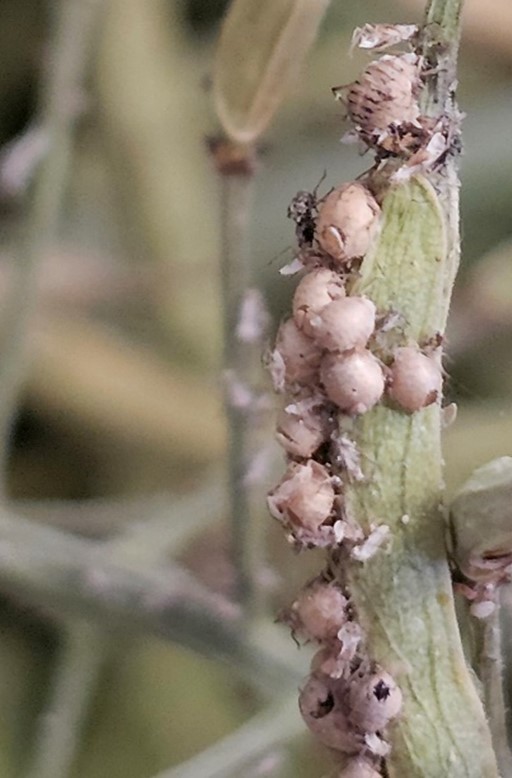
Green-bridge sampling
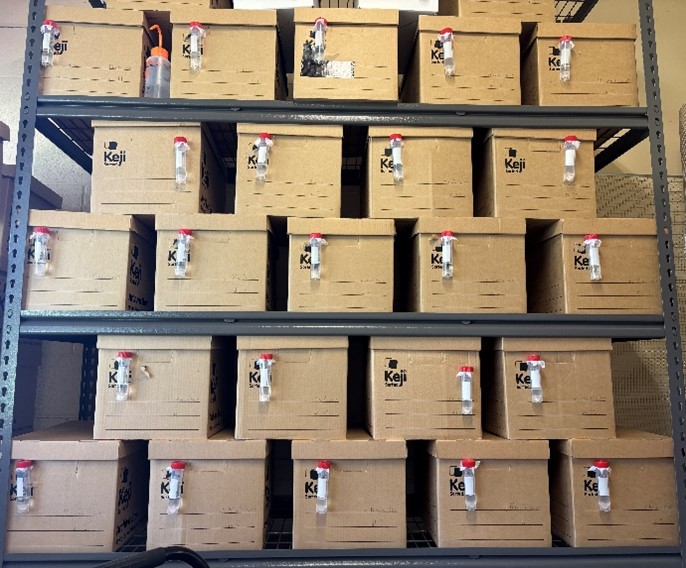
With the financial support from SAGIT, I am on the road, sampling different actively growing weed plants along the roadside and some horticultural crops for aphids and their parasitoids. The plants are placed in sealed rearing ‘eclosion’ boxes that have a single exit passageway leading to a tube with a sample preservative liquid. All rearing boxes are put in a room with 24hr lighting and left for three weeks to allow for the development of parasitoids on the plants.
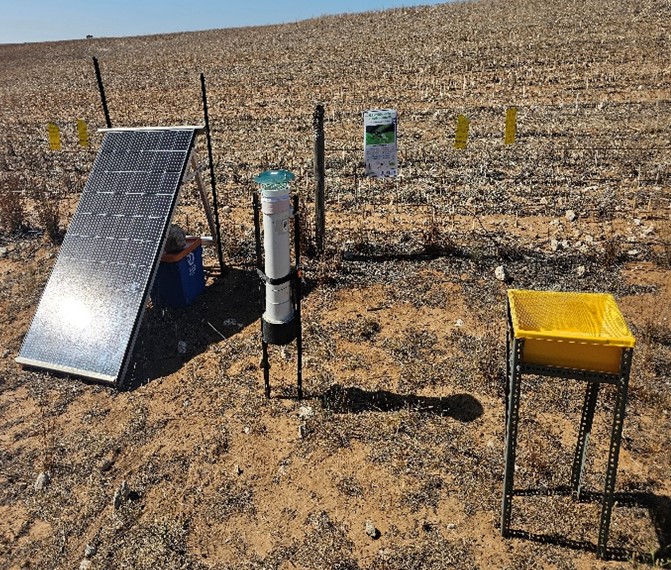
While it has been a slow start in both aphid and parasitoid recordings because of the dry spell, it will be interesting to see what we observe in the coming months leading to the 2025 canola growing season, particularly with the regeneration of weeds. To date, we have collected similar weed composition such as caltrop, common sow thistle, potato weed, skeleton weed and wild radish during our surveillance trips. In the last week, we are starting to see more general insect activity within the environment influenced by the light rains enhancing weed growth. Stay tuned for updates.
My project aims to:
- Recommend a standardised method for monitoring aphid parasitoids in grain crops to assist with informative decision making for aphid management.
- Investigate the over summering strategies of parasitoids in South Australian environmental conditions.
- Study the response of parasitoids to different aphids feeding on various plant species.
Get Involved & stay informed!
Sampling of weeds will continue throughout the year. I need your help with surveillance of weeds. Calling on all plant and insect enthusiast to keep an eye out for weeds with aphids and mummies. If spotted, please:
Weeds:
- Take a good image of the weed sample, and surroundings.
- Send the photos with gps coordinates to any of the following platforms:
Mummied aphid:
- Take a few good pictures of the plant.
- Carefully collect the plant material where the mummy is attached and place in a vial with a small hole or cover the opening with a mesh (This will allow for airflow but prevent the escape of the parasitoid when it emerges).
- Attach the completed form to the sample and send via express mail to:
Kudzaishe Precious
The University of Adelaide- Waite Campus
Waite Building, 1st Floor- East Wing
Office E110
Waite Rd, Urrbrae, SA, 5064

 Invertebrate Systematics and Biodiversity Lab
Leave a comment