

Whether it’s ruining a summer picnic or flying ominously around your porch, when you think of wasps it may not be in the most positive light. Despite some bad PR, wasps are very rarely the menace that we picture. In fact, the majority of wasps don’t sting at all! Tiny, helpful wasps are all around us – in our gardens or on the farms that grow our food. These wasps help our environment to thrive, and today on International World Wasp Day, we want to celebrate them!
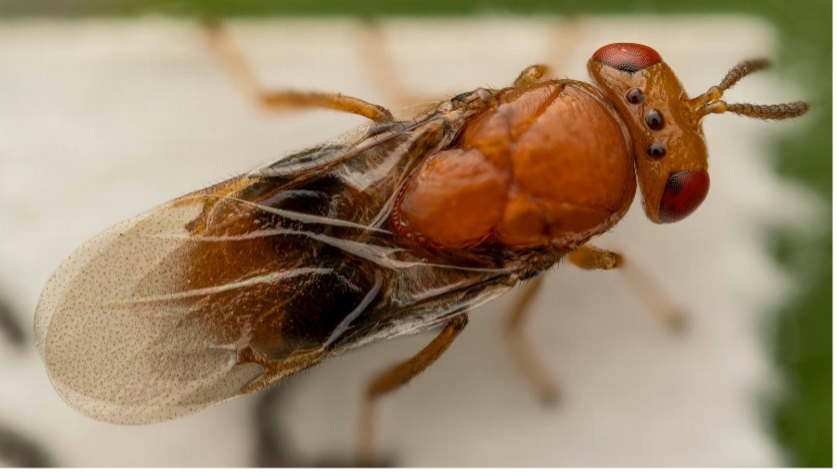

Left: A native Australian wasp in the superfamily Chalcidoidea. Right: A paper wasp you may often see around your house, helpfully keeping your pest insect populations under control. Images by P. Ellinger, used with permission.
Wasps are super heroes
Wasps undertake a variety of roles within our ecosystems, many of which go unnoticed. Many are pollinators and can play an important role in the conservation of our native flora. Lissopimpla excelsa (Ichneumonidae), for example, pollinate species in the orchid genus Cryptostylis. Other groups of wasps are pollinators of fruits and vegetables, such as the family Agaonidae, which pollinate figs (although most commercial varieties in Australia are not pollinated by wasps, many native fig trees still are!). Next time you are out in nature, or enjoying a tasty meal, you can thank wasps for playing an important part in the story.
There are also parasitoid wasps which not only regulate the population sizes of other insects in natural ecosystems but are also crucial to biocontrol and pest management within agriculture. Apanteles subandinus is a parasitoid of the potato moth (Phthorimaea operculella). This species of moth is a serious pest of potatoes across Australia, as well as other plants in the potato family such as tomatoes and eggplants. Without this species, and others that also are parasitoids of this caterpillar, we would be running low on all our favourite potato dishes and snacks!
Some wasps are very specific about their host species, making them a perfect non-toxic method for controlling populations of invasive pest insects in agricultural regions. For example, the species Aphidius colemanispecifically targets some of the most common aphid pests in vegetable crops.
We don’t know enough about Australia’s wasps – a challenge our group is working to meet!
It’s estimated that only a quarter of the wasps in Australia have been described. This means that most wasps don’t have a scientific name, and we don’t know how to identify them. Knowing how to identify species in the environment is really important for knowing if any of them need conservation action, for monitoring impacts of natural disasters like bushfires, or for finding species that are useful to us (e.g. as new biological control agents of pests). Our research group is finding ways to better understand Australia’s wasp biodiversity through the science of taxonomy (naming and describing species), and through using DNA-based methods and citizen science to speed up the discovery of new species.
Group lead: Dr Erinn Fagan-Jeffries
Erinn’s passion is involving school students and communities in documenting their local wasps. She ran the citizen science project Insect Investigators[hyperlink] where regional schools collected insects and then helped decide the name of new species they found. Even in urban areas, most of the wasps in your backyard or schoolyard are probably undescribed! Citizen science (where non-scientists get involved in research projects) is an amazing way to have more people helping to document the thousands of undescribed wasp species in Australia.
Erinn works mostly on the subfamily of parasitoid wasps called Microgastrinae, which are all parasitoids of butterfly and moth caterpillars. These wasps use their ovipositor (the part that is modified into a stinger in species like paper wasps) to inject their eggs into live caterpillars. The baby wasps (larvae) then slowly eat the caterpillar from the inside…. once they’re big enough, they chew their way out and metamorphise into adult wasps inside a cocoon attached to the dying caterpillar host. It sounds like something out of a horror movie (the movie Alien was, in fact, inspired by parasitoid wasps) but they’re an important part of keeping the ecosystem in balance, and can be really useful to control caterpillar pests in crops.
Together with students and collaborators, Erinn has described more than 100 species of parasitoid wasps… but there’s hundreds more to go!
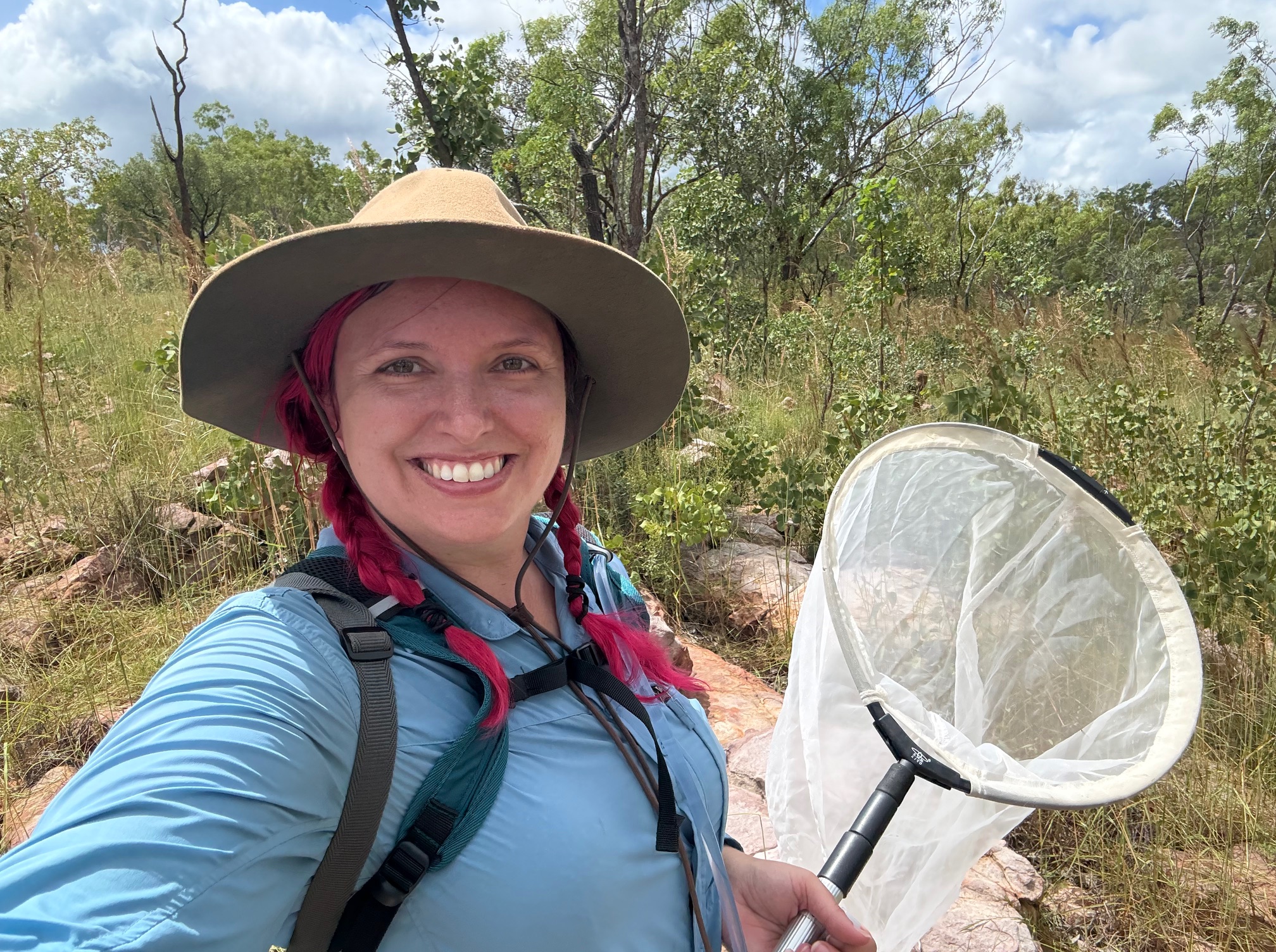

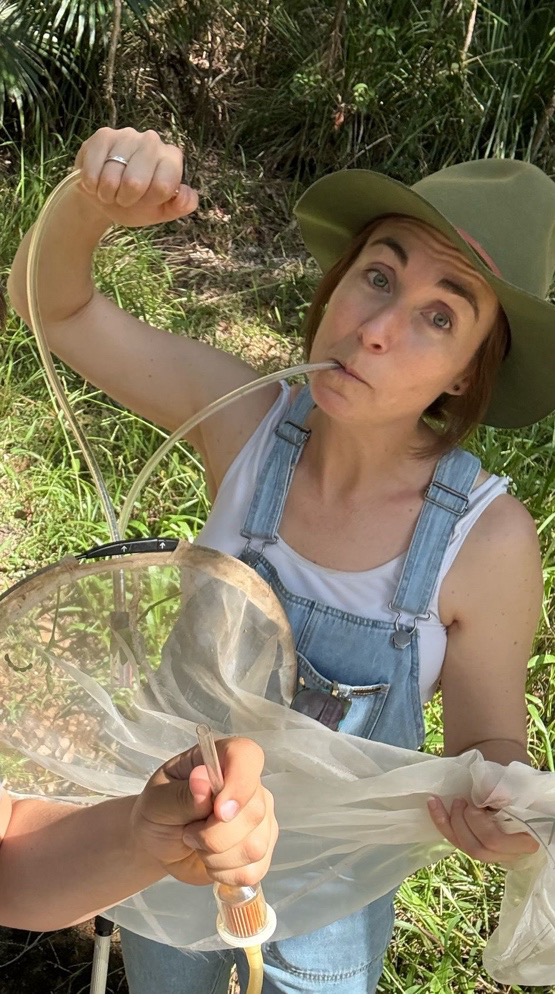
Erinn in the field, collecting wasps with a sweep net, and a Microgastrinae wasp, the group Erinn has studied the longest. This is a species you might see in your garden, as it parasitises the cabbage white butterfly.
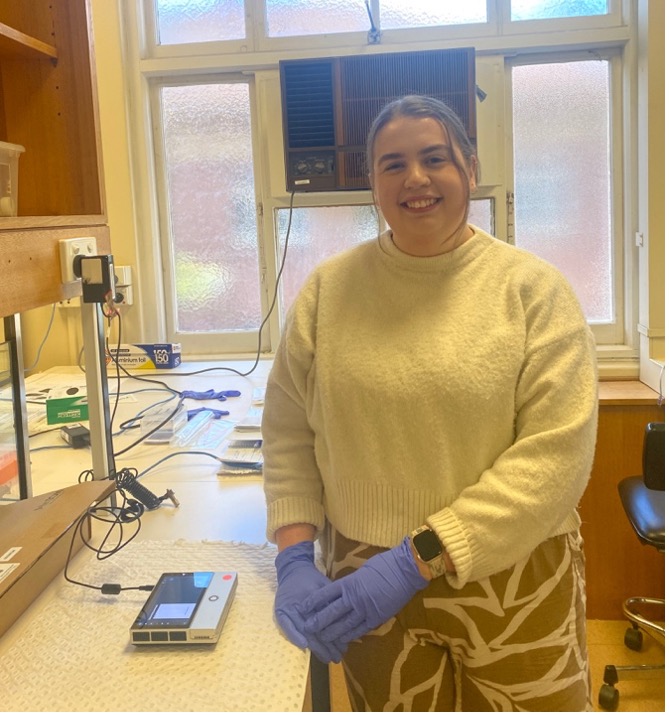
Developing rapid DNA-based species discovery methods: Tiahni Bament
DNA is a useful tool to help discover and describe new species, as well as confirm the identity of already described species. However, molecular methods to gather DNA from tissue can be both time consuming and expensive. Tiahni’s work focuses on creating and perfecting methods that are both quicker and cheaper than currently used. By developing these methods, projects like Insect Investigators can sequence more specimens, leading to more described wasp species and better documentation of wasp biodiversity!
Documenting gall wasps: Tareva-Chine Atkin Zaldivar
Tareva-Chine’s work surrounds a superfamily of wasps named Chalcidoidea, many of which are barely the size of a pen tip. Her focus is on chalcid wasps that lay their eggs inside plants causing galls to form. Think the galls on citrus tree, but on our wattles and native pea-plants!
So far, Tareva-Chine’s research has involved traveling to alpine Victoria to collect bright pink fluffy galls and visiting National parks throughout the Adelaide region to see what bursts out of different galls. Tareva-Chine is helping to show how much undiscovered wasp diversity can be found in galls hidden in plain sight.

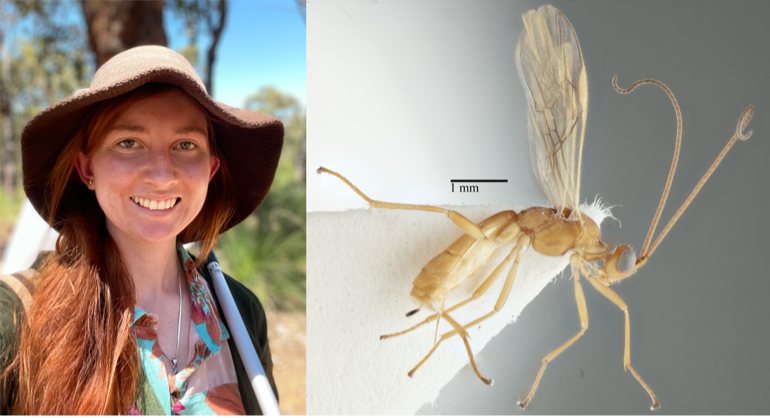
Documenting parasitoid wasps in the subfamily Rogadinae: Mollie-Rosae Slater-Baker
Mollie works on the parasitoid wasp subfamily Rogadinae (meaning ‘wrinkled’, due to their very textured exoskeletons). These wasps are also known as ‘mummy wasps’ as they have a unique ability to mummify their caterpillar hosts. After a female mummy wasp lays her eggs inside a caterpillar, the skin of the caterpillar is turned into a hardened mummy-like husk which protects the wasp larvae as they feed and develop inside. Mummy wasps are often nocturnal and can be attracted to bright lights at night. These wasps are found throughout Australia, and come in many different shapes, colours, and sizes, however there is currently very little published information about them. Mollie’s work aims to examine mummy wasps from museum collections across Australia, and use their DNA to investigate evolutionary relationships, and discover and document new species.
Documenting parasitoid wasps in the subfamily Mesostoinae: Shannon Tetley
Shannon works on another group of parasitoids called Mesostoinae, and is studying their taxonomy and diversity within Australia.
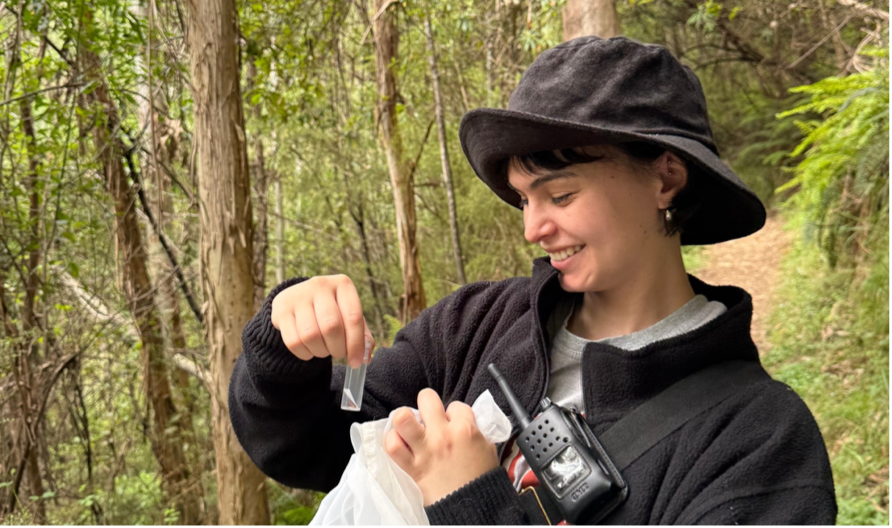
Documenting parasitoid wasps in the genus Paraphylax: Olivia Portmann:
Olivia’s work focuses on the genus Paraphylax, a group of parasitoid wasps from the ichneumonid subfamily Phygadeuontinae. While only four species have been described from Australia so far, a quick glimpse into a museum’s entomology collection is likely to reveal a treasure trove of undescribed species with a diverse range of host relationships – including the larvae of caterpillars and sawflies, the egg sacs of spiders, and even other parasitoid wasps!
By describing new species, Olivia aims to produce the background work necessary for us to be able to further identify and document the diversity of Australian Paraphylax as well as the roles they perform in our ecosystems.

Documenting ghost wasps: Dr Ben Parslow
As the manager of the South Australian Museum’s terrestrial invertebrate collection, Ben works to identify, document, and share the exciting biodiversity of Australia’s insects and especially native wasps. His research focuses on biodiversity discovery, in particular the fascinating wasp family Gasteruptiidae, commonly known as ghost or carrot wasps. These wasps lay their eggs in the nests of solitary native bees where the larvae feed on the bee’s eggs and food provisions. They are found all over the world with the highest diversity of species found here in Australia.


Untangling the taxonomic mess of Australian Psyllaephagus: Dr Alana McClelland
Alana’s research focusses on a genus of parasitoid wasps which control lerp-forming psyllids, insects which can be a devastating pest on eucalypts when they get out of control! The genus is incredibly species rich in Australia (likely well over 1000 species), and although over 100 species are described, many of those descriptions are in such a taxonomic mess that they are practically useless and make using the genus for biocontrol almost impossible. Through proposing an integrated method for taking Psyllaephagus from discovery to description, Alana is describing some of the hundreds of new species of Australian Psyllaephagus that she has discovered, cleaning up the taxonomic mess along the way and making the species useful for future biocontrol research and application.
Documenting aphid parasitoids in Canola: Kudzaishe Precious Mavende
Kudzaishe investigates the tiny but important world of aphid parasitoids across the vibrant yellow canola fields that bloom throughout South Australia each spring. These are introduced wasps from the subfamily Aphidiinae measuring up to 4 mm in length. They serve as remarkable natural biocontrol agents by depositing their eggs directly within aphids. Her research examines how these small, yet agriculturally critical wasps have adapted to local ecosystems. She studies their movement patterns, parasitism rates, and aphid host preferences to recommend practical monitoring methods for growers. By understanding how these introduced parasitoids behave in their adopted habitat, Kudzaishe’s work will help producers implement sustainable pest management strategies. This reduces reliance on chemical pesticides while maintaining crop productivity. Her research bridges the gap between scientific understanding of these beneficial wasps and practical applications. This supports both economic viability and environmental care in modern agriculture.
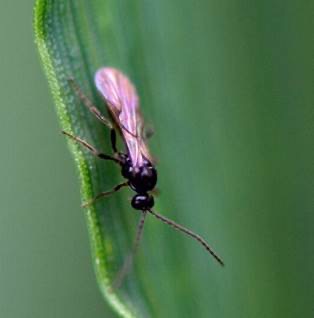
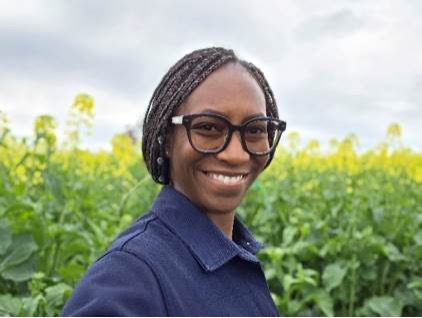
Aphidius on grass leaf. Photo credits: T. Heddle (with permission), Kudzaishe in the field doing her trap servicing.
How can you get involved in Work Wasp Day?
The easiest way to be part of World Wasp Day is to get outside and take some pictures of your local wasps! You can upload sightings of wasps to iNaturalist and we’ll do our best to help identify them.
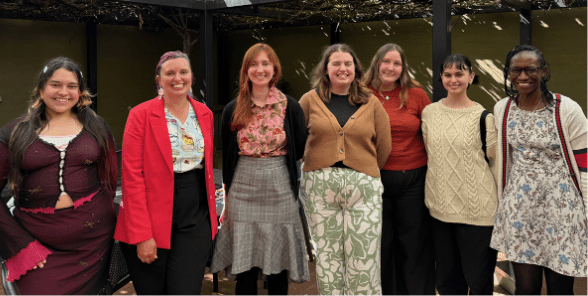
Article written collaboratively by members of The University of Adelaide wasp biodiversity group, many who are pictured above whilst at a conference in 2024.

 Invertebrate Systematics and Biodiversity Lab
Leave a comment