
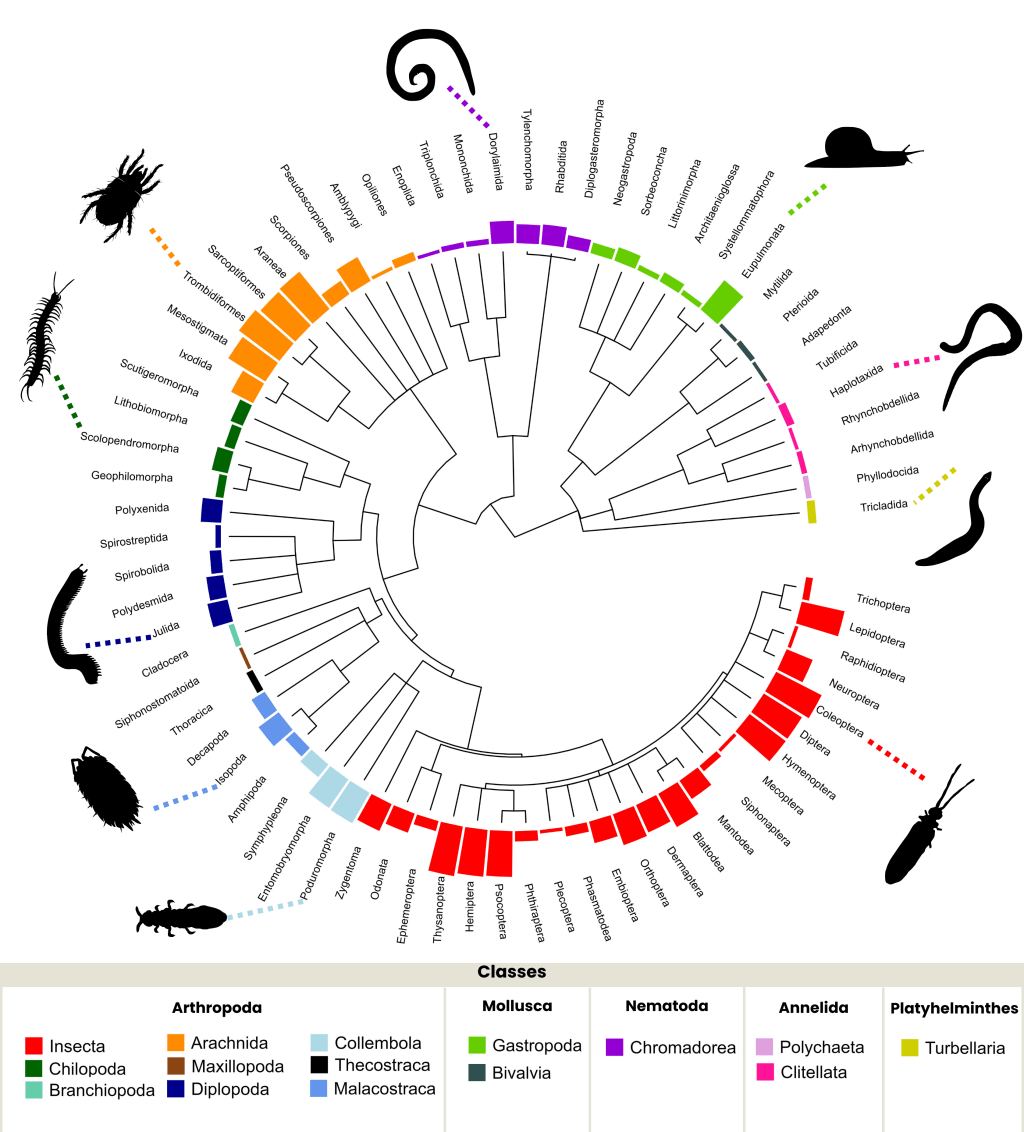
An exciting new paper by Charlotte Lassaline, Erinn Fagan-Jeffries, and collaborators has just been published, presenting the first nine-year overview of terrestrial invertebrate biosecurity interceptions across Australia. Using the Department of Agriculture, Forestry and Fishery’s national interception records from 2016–2024, the team uncovered seasonal trends, the effects of COVID-19 border closures on interception frequency, and ongoing species turnover, with more than 2,400 unique species recorded and no indication that the diversity of intercepted species is nearing saturation. The study highlights how global trade, passenger movement, and the live animal trade continue to drive introductions of non-native invertebrates, reinforcing the need for ongoing surveillance, rapid species identification, and stronger biosecurity systems to protect Australia’s biodiversity and agricultural industries.
Check out the article HERE.

 Invertebrate Systematics and Biodiversity Lab
Leave a comment