
In April 2025, a team of 18 participants — including cavers from four states, scientists from three academic institutions spanning multiple countries, and a Cultural Monitor — took part in one of the largest-scale research expeditions ever conducted in the remote Nullarbor caves.
The trip offered it all: torrential rain and flooded roads (complete with a couple of bogged vehicles), flies and dust, and cold, clear, star-filled nights. All of this was paired with some challenging, exciting and extremely rewarding caving. The survey team made numerous notable discoveries, some of which are globally significant, with multiple new genera and species of eyeless, cave-adapted invertebrates collected.
These findings offer a rare glimpse into the true biodiversity of the largely unexplored Nullarbor cave systems — an environment that is poorly understood but is increasingly threatened by pressures from mining and large-scale industrial development.
World’s only known eyeless wasp discovered mummified in Nullarbor cave – ABC News
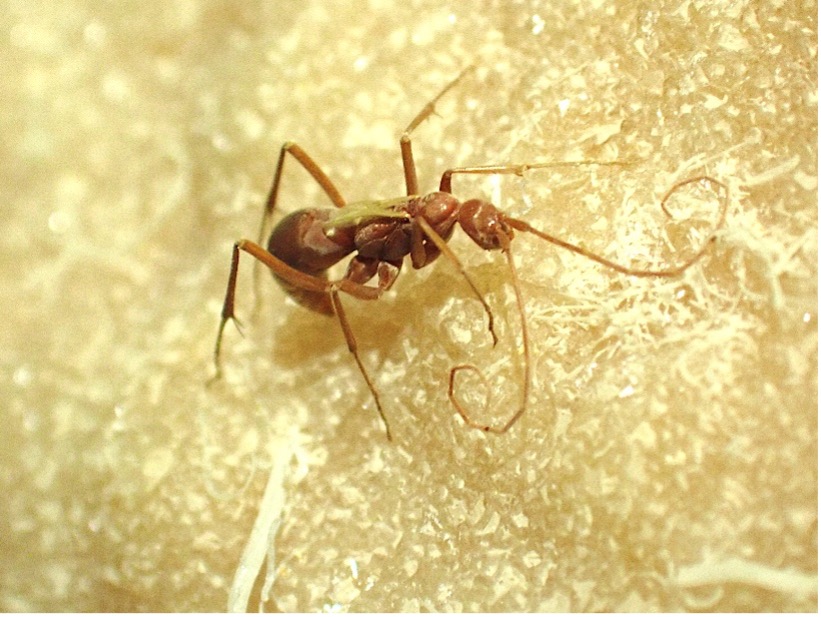
This paper, which was published recently in Austral Entomology by Jess Marsh, Andy Austin and Juanita Rodrigueas, marks the first in a series of papers documenting these discoveries. Here we describe Troglopompilus miracaecatus, a new genus and species, and the only cave-adapted member of the Pompilidae family known worldwide — lacking eyes and having very long antennae and legs. This remarkable animal is only known from a single cave, and only from mummified specimens. Being a pompilid, the species is a parasitoid of spiders and all species of spider found in the same cave were eyeless and highly cave-adapted — the quest to try and find out the host species has begun.

 Invertebrate Systematics and Biodiversity Lab
Leave a comment