
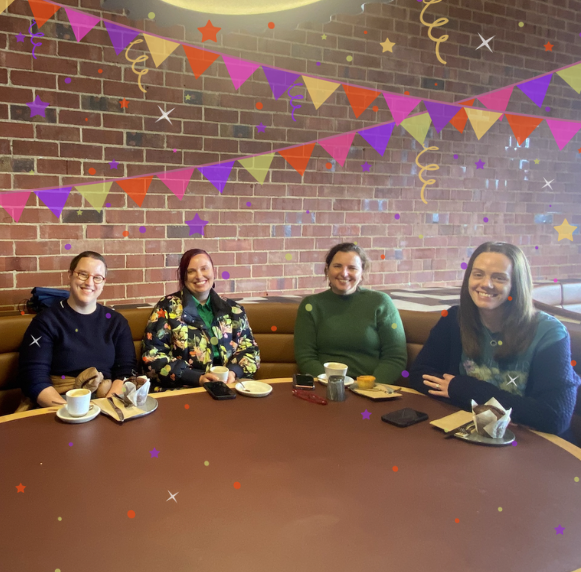
Postdoctoral researchers Dr Perry Beasley-Hall and Dr Danielle Stringer have been awarded prestigious three-year research grants by the Australian Biological Research Study (ABRS), totalling $675,000, to undertake research in taxonomy and systematics.
The ABRS is an Australian Government program that supports the discovery and naming of Australian organisms and the dissemination of this knowledge. Research supported by the ABRS is critical to understanding, conserving, and managing Australia’s rich (and largely undescribed) biodiversity.
Cave crickets: spindly, understudied, and in trouble
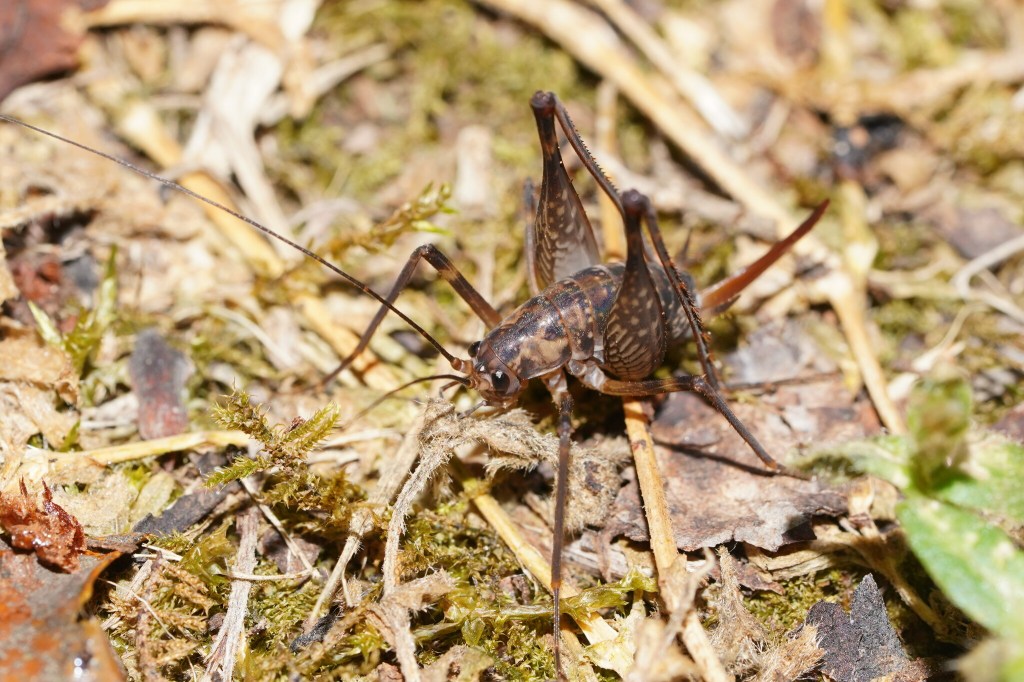
An undescribed cave cricket species from the outskirts of Melbourne. Image courtesy of Reiner Richter via iNaturalist.
Perry was awarded a Research Grant to work on the taxonomy and systematics of cave crickets (Rhaphidophoridae), a subterranean insect group related to katydids. Cave crickets are flightless and thrive in cool, humid habitats. While their common name suggests they can only be found underground, these insects also thrive in wet forest, where they have largely gone unstudied. Perry’s project seeks to re-examine these biodiversity hotspots and uncover 15–30 new cave cricket species, which are likely to be threatened because of a poor capacity to disperse and adapt to environmental change.
Cave crickets are ecologically significant because they forage above-ground on a daily basis, re-injecting energy into an otherwise starved ecosystem. For this reason, the crickets can be considered “keystone species” in many Australian cave systems: that is, a group that disproportionately contributes to the health of an ecosystem. Perry’s project will therefore also aim to provide extinction risk assessments for the 30–50 estimated species in Australia so they can be formally listed on the IUCN Red List.
Pilbara subterranean amphipods: overlooked, but species rich
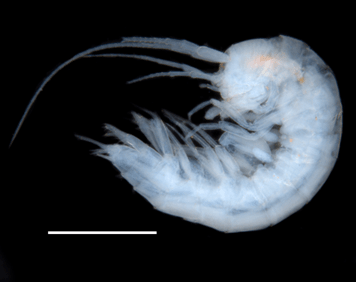
A subterranean paramelitid species from groundwater in the Pilbara. Image courtesy of Rachael King (South Australian Museum).
Danielle was awarded a Postdoctoral Fellowship to undertake taxonomic research on the amphipod (Crustacea) family, Paramelitidae, from the Pilbara region of Western Australia. The Paramelitidae is a highly diverse and widespread family of freshwater amphipods, especially prevalent within the Pilbara’s threatened groundwater ecosystems. Biological surveys associated with environmental impact assessment and mining, along with previous scientific research, have revealed numerous new putative genera and species. However, these taxa remain undescribed, which challenges effective decision-making and conservation.
Danielle’s project therefore aims to enhance taxonomic knowledge of Pilbara paramelitid amphipods through the description of 30–40 new species using an integrated molecular and morphological approach. The project will establish a comprehensive molecular framework to inform taxonomic descriptions, develop publicly available identification tools, and strengthen taxonomic capacity.
Together, these projects will greatly improve our understanding of Australia’s endemic and at-risk subterranean fauna.
Congratulations to Perry and Danielle!


Leave a Reply