
Groundwater ecosystems: between a rock and a dark place
Groundwater is vital to life on earth. It provides fresh drinking water, supplies irrigation to agriculture and sustains countless ecosystems. But beyond supporting life on the surface of the earth, groundwater is also the home to diverse subterranean communities of animals and microbes. These ‘groundwater ecosystems’ inhabit the darkness of aquifers, performing essential ecological functions but are rarely considered in groundwater management decisions.
Largely overlooked and little understood, groundwater ecosystems are critical in maintaining water quality and ecosystem health. Complex interactions among subterranean organisms purify groundwater by filtering contaminants, while burrowing activity prevents sediment compaction and maintains subsurface water flow. Being integral to the long-term sustainability of these invaluable freshwater assets, groundwater ecosystems are the custodians of groundwater quality. However, overexploitation and pollution of groundwater resources is placing significant pressure on these fragile communities.
Although our understanding of groundwater ecosystems continues to grow, studying these inaccessible habitats with traditional survey methods remains challenging. Environmental DNA (eDNA) is emerging as a powerful complementary monitoring tool, enabling the detection of species from genetic material captured in sampled groundwater. In groundwater ecosystems, eDNA has demonstrated considerable potential through the targeted detection of rare and elusive species and for characterising biodiversity across the tree of life, simultaneously identifying animals, fungi, bacteria and other microorganisms.
While eDNA has demonstrated its value as a novel survey approach, further optimisation is needed before it can be widely adopted as a viable monitoring tool for groundwater ecosystems.
Introducing GReG
Affectionately acronymised as GReG, Global Research on environmental DNA of Groundwaters is an international initiative connecting researchers, stakeholders and groundwater experts to advance the application of eDNA in groundwaters. Co-led (by Dr Michelle Guzik) and supported (by Jake Thornhill) of the ISB lab, GReG aims to standardise groundwater eDNA methodologies to develop a robust research toolkit to support the study, monitoring and conservation of groundwater ecosystems worldwide.
A truly global project, the first phase of GReG has seen collaborators sample eDNA from 47 high-profile groundwater sites in 19 countries across five continents using a standardised sampling protocol.
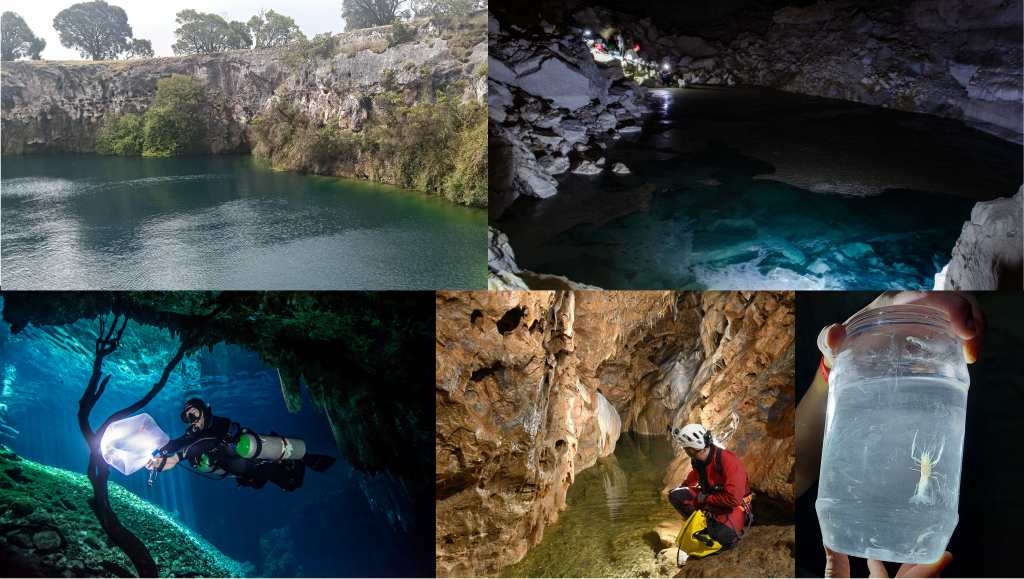
From top-left in clockwise order: groundwater filled sink hole in southeastern, South Australia (Photo: Jake Thornhill); sulphuric pool in Ayyalon Cave, Israel (Photo: Anton Levantov); endemic blind shrimp (Typhlocaris ayyaloni) from Ayyalon Cave (Photo: Boaz Langford); Grotte de Ramioul in Belgium (Photo: Gaëtan Rochez); and sampling a cenote in the Yucatán Peninsula, Mexico (Photo: Kay Vilchis).
Launched in May 2025 with an online seminar, the project has progressed rapidly, achieving a series of significant milestones:
Bespoke groundwater sampling kits designed and shipped globally
Custom sampling kits were developed to minimise the complexity of eDNA sampling while maintaining strict contamination controls and preserving unstable DNA molecules during extended periods of international shipping.
Groundwater sampling conducted across the world
Field teams in 19 countries collected eDNA from a diverse range of groundwater environments. The samples were filtered in the field before being returned to Australia for lab processing.
A customised DNA extraction protocol designed
Specifically tailored to the address the challenge of low eDNA concentration in groundwater samples, a custom protocol for extracting and concentrating DNA was developed and tested before being applied across the project samples.
DNA sequencing completed
A panel of six metabarcoding assays were carefully selected to effectively characterise diversity across the tree of life, targeting animals, fungi, protists, bacteria, and archaea. The hundreds of samples returned from around the world were sequenced by eDNA Frontiers at Curtin University, Perth. The resulting dataset provides the most comprehensive examination of groundwater biodiversity from eDNA to date.
Analysis of the global dataset underway
Following sequencing, samples have been processed through a bioinformatic pipeline specifically tailored to the challenges of groundwater ecosystems. Preliminary analyses have revealed a remarkable groundwater biodiversity from across the tree of life, supporting the GReG methodology as an effective tool to document subterranean life on a global scale.
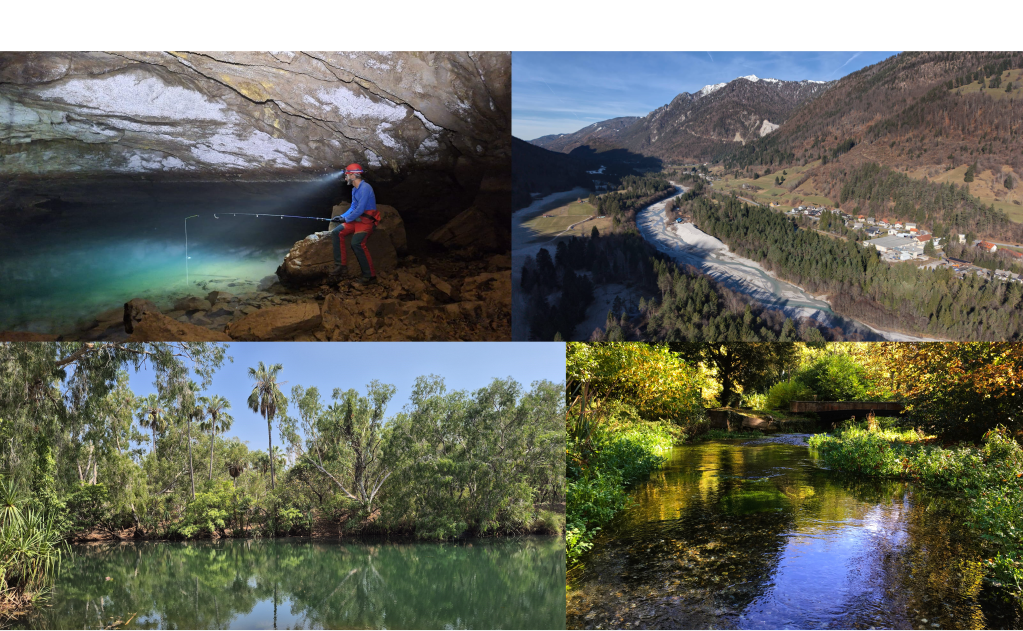
From top-left in clockwise order: groundwater pool in a Croatian cave (Photo: Helena Bilandzija); Sava River catchment, Slovenia (Photo: Davorin Tome); a groundwater-dependent chalk river, southern England (Photo: Tim Johns & Anne Robertson); and a groundwater-supported wetlands in the Beetaloo Region, Northern Territory, Australia (Photo: Maxine Piggott).
A year on from the project launch, 45 GReG collaborators convened (or conGReGated) at the National Natural History Museum in Paris for a two-day workshop. Experiences and results from the first phase were shared, while plans were developed for the project’s next phase, including strategies to extend the scope to underrepresented groundwater regions across the Global South.
As the first phase concludes, GReG has already achieved several notable successes: delivery of the first global eDNA study of groundwater ecosystems, validation of a bespoke and scalable research design, and the establishment of a strong international network of researchers and stakeholders.
Learn more about the project and visit some of our favourite ecosystems on our website, www.gregproject.com
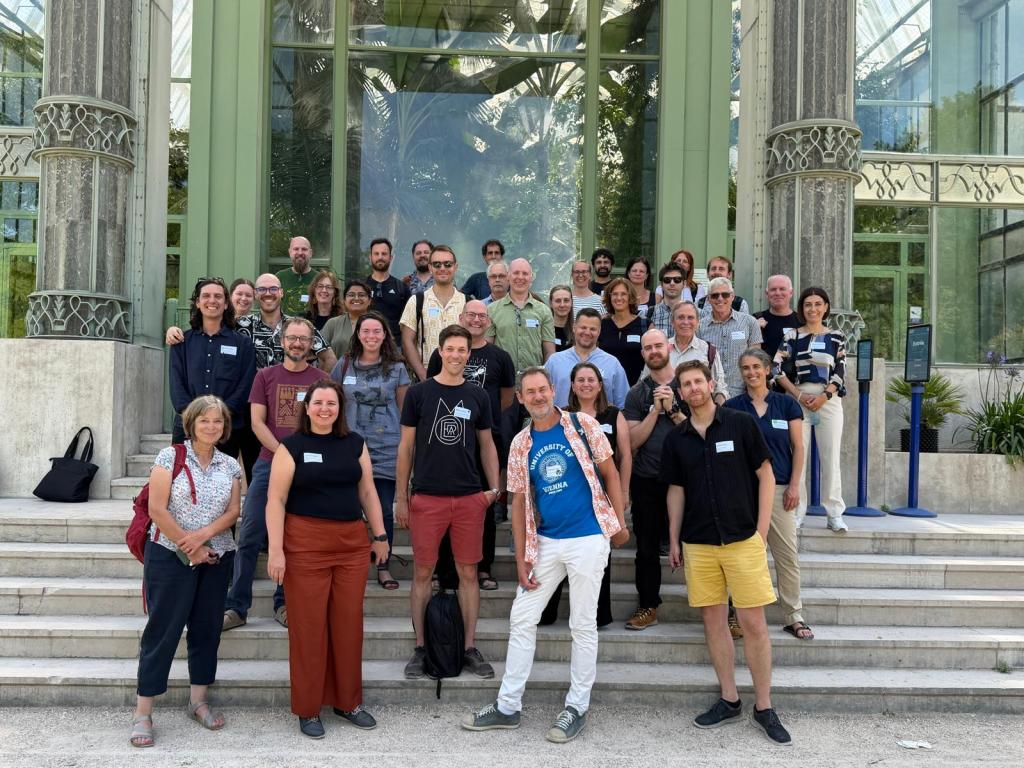
The GReG collaborators in Paris post-workshop


Leave a Reply